
Opening a pop-up shop in the UK can be a fast way to launch a product, test physical retail or enter a new market without committing to a permanent store.
Temporary, however, does not mean unregulated.
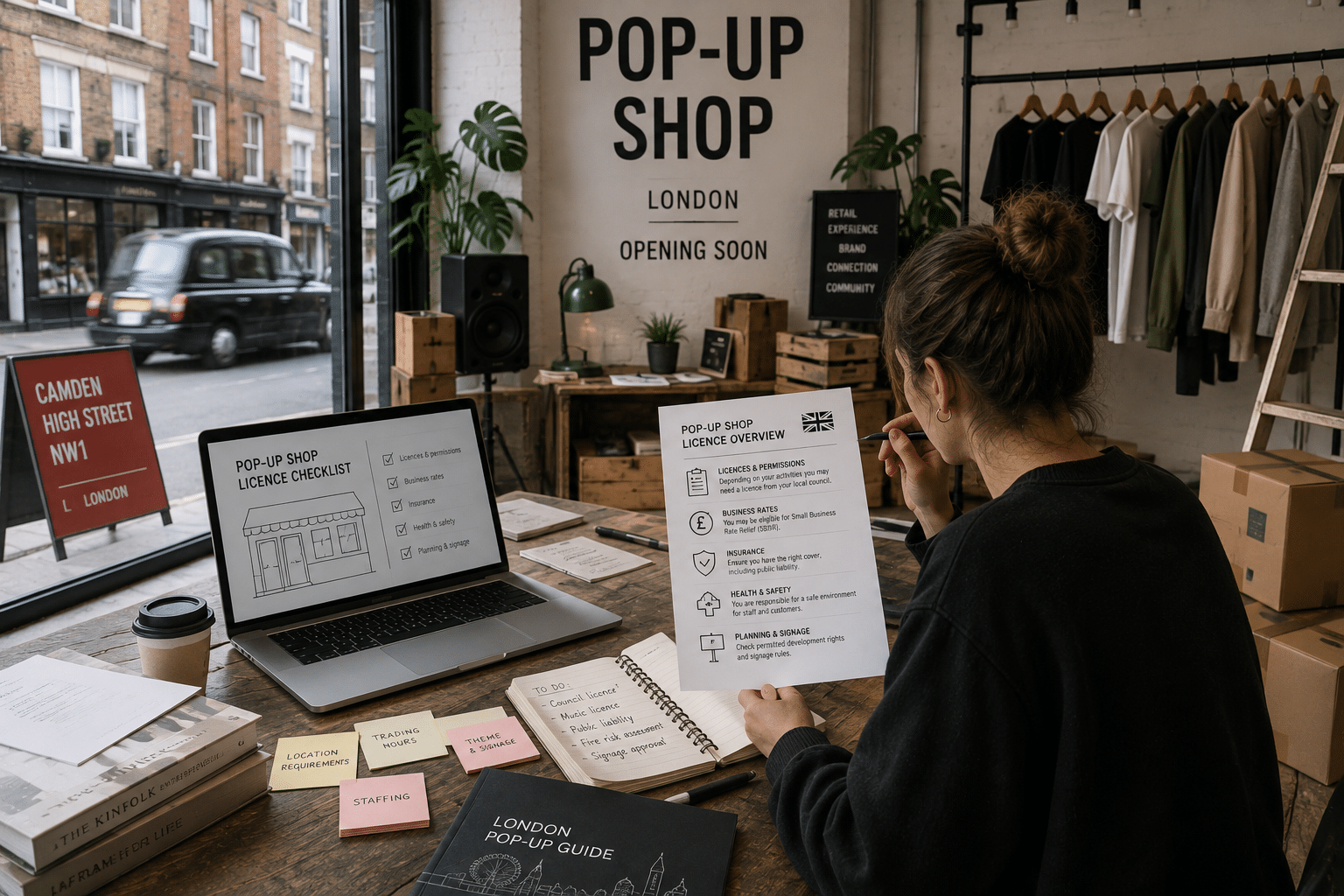
There is no single universal “pop-up shop licence”. The permissions and compliance requirements depend on the nation, local authority, venue and activities planned inside or outside the space.
A straightforward retail activation in an existing shop may be relatively simple. Alcohol, food, entertainment, late opening, major alterations or use of public space can add further requirements.
Do you need a licence for a pop-up shop in the UK?
Not simply because the store is temporary.
The more useful question is: what will happen inside the pop-up, and is the venue already suitable for those activities?
A fashion brand selling products from an existing retail unit has different needs from a three-day launch involving alcohol, DJs, food and hundreds of guests.
Define the full activation before booking. That determines which permissions need to be investigated.
UK-wide or local rules?
“UK regulation” can be misleading because some rules differ between England, Wales, Scotland and Northern Ireland.
Local authorities also manage many practical areas, including planning, licensing and public-space activity.
Before opening, identify:
- Which UK nation the venue is in.
- Which local authority covers the address.
- Which activities the activation includes.
This is particularly important for international brands using a UK pop-up as part of a wider market-entry strategy.
1. Check the permitted use of the venue
Start with the premises itself.
Confirm the current use, whether retail is appropriate, what the owner permits and whether the planned activation introduces activities beyond normal shopping.
Do not assume that because a venue is available for hire, every type of event or brand experience is automatically permitted.
2. Fire safety
Fire safety must be considered from the beginning.
Review escape routes, emergency exits, capacity, warning systems, fire-fighting equipment, furniture placement, stock storage, electrical installations and any temporary structures.
A visually ambitious activation must not compromise safe visitor movement.
3. Planning permission and building changes
The temporary nature of the project does not automatically remove planning or building-control considerations.
Check whether the activation changes the use of the premises, requires substantial alterations, modifies external elements or introduces activities very different from the normal operation of the venue.
Where there is uncertainty, the relevant local authority should be consulted before production starts.
4. Selling or serving alcohol
Alcohol is one of the clearest situations in which licensing becomes important.
Even when drinks are only a small part of an opening event, they can change the requirements of the activation.
Confirm whether the venue already has the appropriate authorisation and who is responsible for compliance. Do not add alcohol at the final stage without checking the licensing route.
5. Temporary Event Notices
For short activities in England and Wales, a Temporary Event Notice may be relevant when certain licensable activities are planned at premises not already authorised for them.
This may include alcohol, some entertainment and late-night hot food or drink.
A notice is not a universal solution. Event size, duration, eligibility and the number of notices are subject to limits.
The practical lesson is simple: investigate the route before confirming the programme.
6. Music and entertainment
Many pop-ups combine retail with DJ sets, performances, screenings, talks, workshops or community events.
The requirements depend on the type of entertainment, timing and venue.
Include the entire programme in the operational brief rather than treating music as a minor addition.
7. Late-night food and drinks
Opening hours can change the regulatory position.
A daytime retail pop-up and a late-night launch with hot food or drinks do not have the same profile.
If the event runs late, verify the relevant requirements before booking and communicate them to the venue.
8. Food and sampling
There is an important difference between displaying packaged products, offering samples, preparing food and operating a café.
Food safety, hygiene, registration and infrastructure requirements depend on the actual activity.
Disclose food plans during venue sourcing. A store that works for fashion may not have the facilities required for preparation or service.
9. Signage and exterior branding
Window graphics, logos, illuminated elements and temporary signage can turn the physical location into a media asset.
Exterior branding may still be subject to owner approval, planning controls, advertising consent or building-specific restrictions.
Confirm what can be installed, where and for how long before producing the materials.
10. Accessibility
Accessibility should be part of venue selection and design.
Review the entrance, internal circulation, service areas, temporary furniture, displays, fitting rooms and event configurations.
A temporary fit-out should not create unnecessary barriers or make an otherwise accessible venue harder to use.
11. Property costs and business rates
The headline rental rate may not be the complete occupancy cost.
Clarify who is responsible for business rates, utilities, service charges, cleaning, security, waste, insurance and any additional venue fees.
Two spaces with similar rent can have very different total costs.
12. Insurance
Insurance requirements depend on the activity, venue agreement and project structure.
The activation may introduce risks through staff, contractors, visitors, products, equipment, temporary installations and events.
Confirm the required cover before opening rather than assuming it is included with the venue.
13. Pavement and public-space activity
Do not assume that the area outside the shop is included.
Displays, furniture, sampling, queues, promotional teams and installations on public space may require separate permission.
If the concept depends on the exterior area, investigate it before booking.
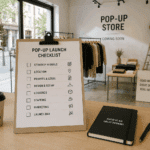
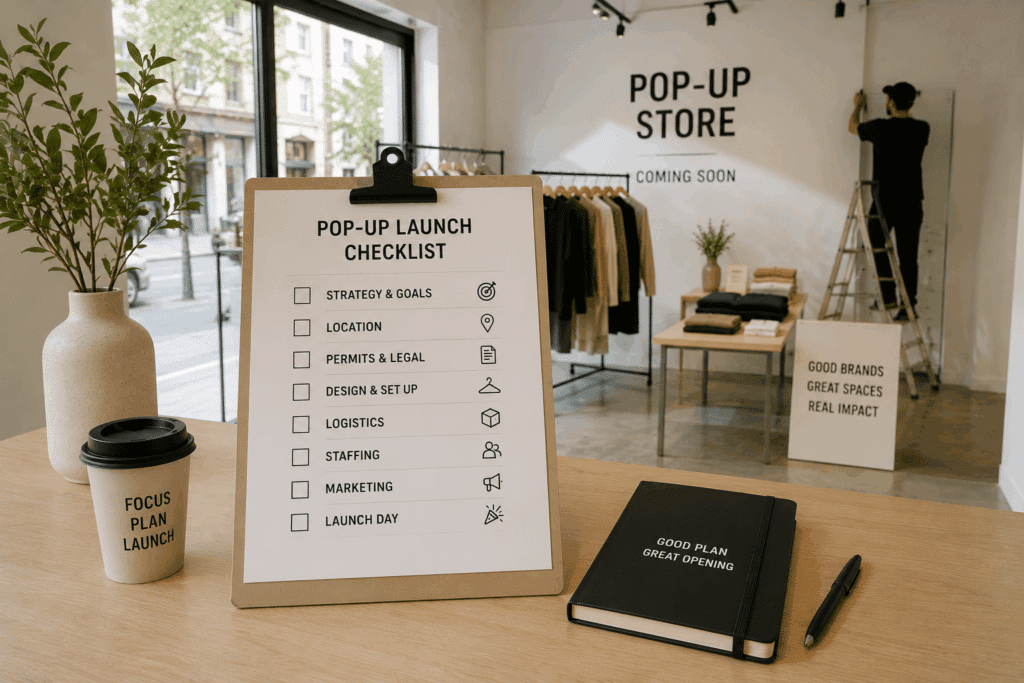
14. Checklist before booking
Venue
- Is retail use compatible with the premises?
- What activities are already permitted?
- What is the safe capacity?
- Are there owner restrictions?
Fit-out
- What can be changed?
- Can windows and the façade be branded?
- Will the layout affect escape routes or accessibility?
Retail and events
- What products will be sold?
- Will there be food, alcohol, music or entertainment?
- Will the activation operate late?
Exterior and operations
- Will public space be used?
- What insurance is required?
- Who pays rates, utilities and additional costs?
- How will stock and production materials be delivered?
15. When should permissions be checked?
The safest order is:
- Define the activation.
- Identify activities and operating requirements.
- Search for compatible venues.
- Confirm licences and permissions.
- Secure the venue.
- Begin production.
The wrong order is to design the full concept, book a visually attractive space and investigate the rules afterwards.
Finding a suitable London venue
The easiest way to reduce unnecessary complexity is often to start with a venue already suited to the intended activation.
A fashion shop, invitation-only showroom, beauty launch with drinks and large experiential event do not need the same space.
You can compare pop-up spaces in London and use the guides to London pop-up costs, Soho, Shoreditch and Covent Garden to refine the brief.
From venue sourcing to execution
Complex activations can involve scouting, concept development, adaptation, production, staffing, logistics, POS, audiovisual equipment, permits, installation and on-site management.
International brands without a UK team can coordinate these elements with the Go—PopUp agency.
UK pop-up licensing: key takeaway
There is no single universal licence for every UK pop-up shop.
The requirements depend on the nation, local authority, venue and activities planned.
For complex projects, confirm the position with the relevant authority or a qualified professional before opening.