
Anyone planning a pop-up store in Germany will sooner or later ask themselves the same question:
How much does a pop-up store cost?
There is no single fixed figure.
A small temporary store in a secondary location, a showroom in Berlin-Mitte, and a high-quality retail space in a central location in Munich can require completely different budgets.
Furthermore: Rent is only one part of the total costs.
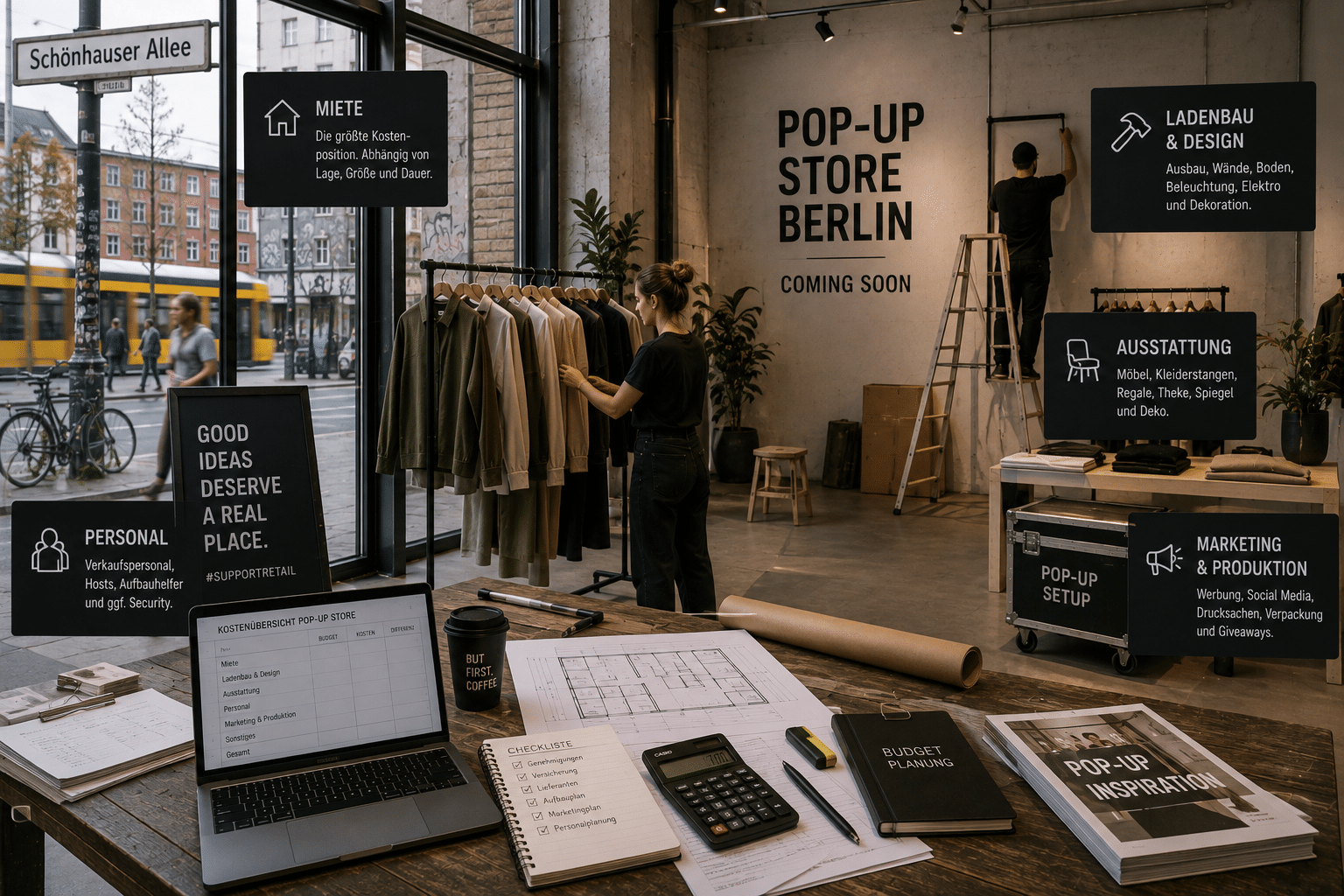
Depending on the project, brands must also factor in additional expenses for store construction, furniture, branding, personnel, logistics, technology, insurance, and, if necessary, permits.
Therefore, the more important question is not:
“How much does it cost to rent a pop-up store?”
But:
What is the total cost of transforming this location into a functioning pop-up store?
This guide shows which factors determine pop-up store costs in Germany and how brands can realistically plan their budget.
How much does it cost to rent a pop-up store in Germany?
Rental prices for temporary retail spaces vary considerably.
Current offers already demonstrate the wide range of prices. For example, a Berlin pop-up store is being offered for around €460 per day, while showroom spaces in Munich can cost several hundred to over €1,000 per day, depending on size and location.
BIKINI BERLIN, on Go—PopUp, offers flexible pop-up boxes with rental periods of one to twelve months and prices of approximately €3,000 to €6,000 net per month per box, depending on size and features; utilities are already included.
These examples are not universally applicable average prices for Germany.
Rather, they show why pop-up costs cannot be meaningfully reduced to a single price.
The following are particularly important:
- City
- Micro-location
- Size
- Duration
- Frequency
- Shop window and visibility
- Furnishings
- Condition of the space
- Season and date
- Technical requirements
- Additional services
Anyone who already knows that Munich is a suitable location for activation can discover pop-up spaces in Munich at Go—PopUp and compare different location and space concepts.
What factors determine the cost of a pop-up store?
1. City and Location
Location is one of the most important cost factors.
Berlin, Munich, and Hamburg offer completely different retail environments – and even within the same city, a few streets can make a significant difference.
Current data on long-term commercial rents also illustrate these differences: For 2024, average asking rents for retail and restaurant space were reported as approximately €20.19/m² in Munich, €18.93/m² in Berlin, and €16.76/m² in Hamburg. These figures are not temporary, inflated prices, but they do demonstrate the varying rent levels in different cities.
For a pop-up, however, the micro-location is often more important than the city average.
A busy shopping street, a creative district, and a destination location operate according to completely different principles.
Therefore, the question should not be:
“Which city is the cheapest?”
But:
“Where can we reach the right target group for this concept?”
Pop-up store costs in Berlin
Berlin is one of the most diverse pop-up markets in Germany.
Mitte, Kreuzberg, Prenzlauer Berg, Neukölln or Charlottenburg appeal to different target groups and offer very different types of spaces.
The city is particularly suitable for:
- Fashion
- Streetwear
- Lifestyle
- Beauty
- Design
- Tech
- Art
- Community Activations
- Experience-led Retail
The price range is correspondingly large.
A small store away from the main high-traffic areas can be significantly cheaper than a premium space in the city center or a location within an established retail concept.
At BIKINI BERLIN, for example, pop-up boxes are currently offered in the range of approximately €3,000–€6,000 net per month.
For brands, this means: Berlin itself doesn’t define the budget, but rather which Berlin fits the concept.
Pop-up store costs in Munich
Munich can be particularly interesting for premium, fashion, beauty, lifestyle and design-oriented brands.
Here too, the price varies greatly depending on location and format.
Currently published temporary advertising spaces show, for example, offers from:
- €479 per day for a 100 m² showroom in northern Munich €490 per day for a workshop/showroom space of approximately 100 m² €750 per day for a 230 m² showroom in Giesing €977 per day for a 100 m² loft showroom in Schwabing €1,374 per day for larger studio/loft spaces in Westend “`
These figures should not be interpreted as fixed market prices. Rather, they show how much size, format, and location influence the budget.
If Munich is part of your retail strategy, you can discover available pop-up spaces in Munich at [link to app.gopopup.com/en/search/M%C3%BCnchen] and check which formats fit your concept and budget.
Pop-up store costs in Hamburg
Hamburg, in turn, offers a different environment.
Premium shopping, city center locations, the port, the Speicherstadt (warehouse district) and various other districts offer diverse opportunities for temporary retail.
Current offers also demonstrate the range: temporary showroom spaces, for example, are offered from around €215 per day, while larger or more centrally located concepts can cost significantly more.
Therefore, even in Hamburg, the rental price alone should not be the deciding factor for a brand.
A cheaper space without significant foot traffic can be less economically viable than a more expensive space that reaches precisely the desired target group.
2. Size of the area
More square meters usually mean more rent.
But the effect goes beyond that.
A larger area can incur additional costs for:
- Furniture
- Lighting
- Branding
- Decoration
- Staff
- Cleaning
- Heating or Energy
- Production
- Setup and Dismantling
A brand whose concept works in a 60 m² space shouldn’t automatically rent 200 m² just because the larger space looks more impressive.
Unused square meters don’t just cost rent. They often also need to be designed and maintained.
3. Runtime
A pop-up can last a day, a weekend, several weeks, or several months.
Naturally, the total budget increases with the project duration.
The daily price does not always have to rise proportionally.
Depending on the landlord and the size of the space, longer bookings may offer different conditions than very short bookings.
Therefore, don’t just compare:
Price per day
but:
Total costs for the required activation period.
4. Frequency and Visibility
A space in a busy shopping area may be more expensive, but it potentially offers more organic visitors.
This can be useful for a retail activation whose success depends on foot traffic.
The calculation looks different for a private showroom.
If customers, press, or buyers are already coming to the location with a specific purpose, it may be unnecessary to pay a high premium for maximum foot traffic.
And the same applies here:
More frequency does not automatically mean better frequency.
The target audience must be a good fit for the brand.
5. Shop window and street front
Large shop windows, corner locations and highly visible entrances can increase the rent.
For a pop-up, they can have significant marketing value at the same time.
A good facade functions like a physical advertising space throughout its entire activation.
Passersby see the brand even if they don’t enter the store.
For sales-oriented pop-ups, this surcharge can therefore be worthwhile.
Possibly not for a B2B showroom.
6. Furnishings of the area
One of the biggest mistakes in budget planning is only comparing rents.
Imagine two spaces.
Space A costs less, but is completely empty.
Space B costs more, but already has lighting, shelves, clothes racks, furniture and a functioning retail infrastructure.
Space A appears cheaper in the offer.
Even after production, transport, furnishing and assembly, Space B can still be the more economically viable option.
Therefore, always ask:
What is already included in the rental price?
Rent is only one part of the pop-up budget
For a realistic budget, a brand should not only calculate the area.
The total costs can be simplified as follows:
Area + Design + Production + Operation + Logistics + Marketing
The size of the individual blocks depends on the concept.
A simple showroom may require relatively little production.
In contrast, an immersive brand activation can invest many times the actual room rental costs in design and implementation.
What additional costs are there besides the rent?
Store Design and Interior Design
How much does the surface need to be changed to fit the brand?
Depending on the project, costs may arise for:
- Spatial Concept
- Technical Planning
- Custom Furniture
- Carpentry Work
- Lighting
- Temporary Installations
- Decoration
- Set Design
The more the space needs to be transformed, the less meaningful the pure rental price becomes.
Furniture
Shelves, tables, counters, clothes racks, mirrors, seating, and displays must either be available, rented, or produced.
Therefore, check carefully what the space already offers before planning.
Branding
A pop-up should be temporary, but not appear makeshift.
Typical branding costs include:
- Shop window stickers
- Signage
- Vinyls
- Signage
- Prints
- Interior graphics
- External branding
- Branded Installations
Production, setup and dismantling
Everything that is designed must be produced and installed.
After activation ends, the space often needs to be reset to its original state.
Complex concepts therefore require additional production partners and working hours.
Staff
Depending on the activation, the following may be required:
- Sales staff
- Brand Ambassadors
- Hosts
- Security
- Event staff
- Store Manager
- Project management
The longer the store is open, the more relevant this cost category becomes.
Logistics
Products, furniture, and production materials must be transported to the site.
The budget can include:
- Transport
- Delivery
- Storage
- Stock Handling
- Replenishments
- Collection
- Disposal
POS and technology
When products are sold, payment and connectivity must be planned.
Depending on the project, POS systems, devices, internet access, and other technical solutions may be required.
Audiovisual technology
Screens, projectors, sound, light installations, or interactive elements can dramatically change a space.
Experience-led activations can simultaneously represent a significant portion of the production budget.
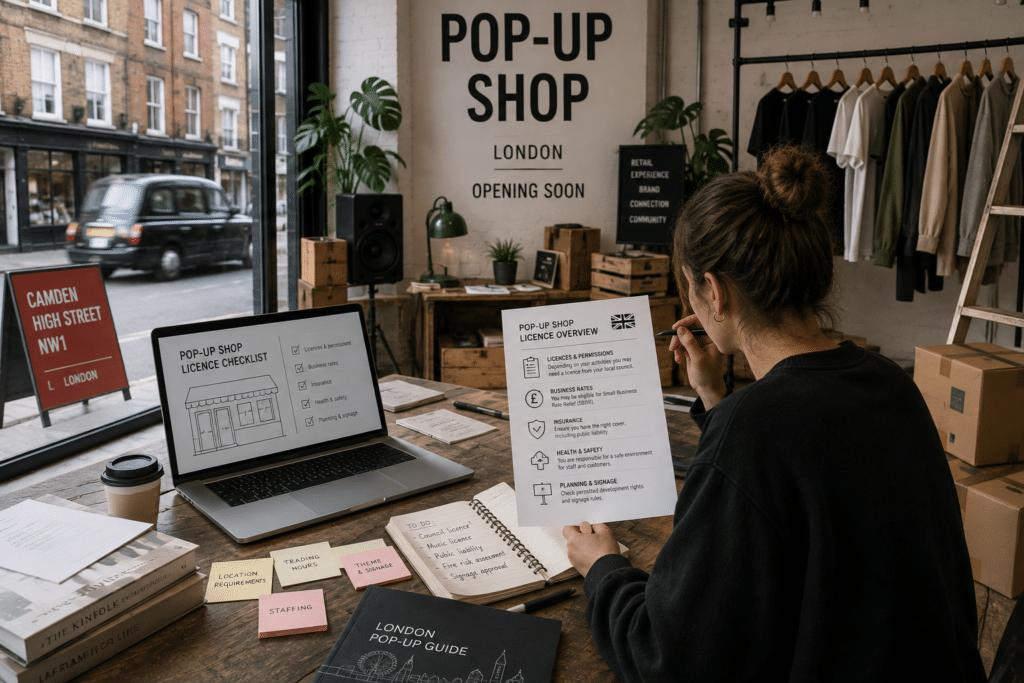
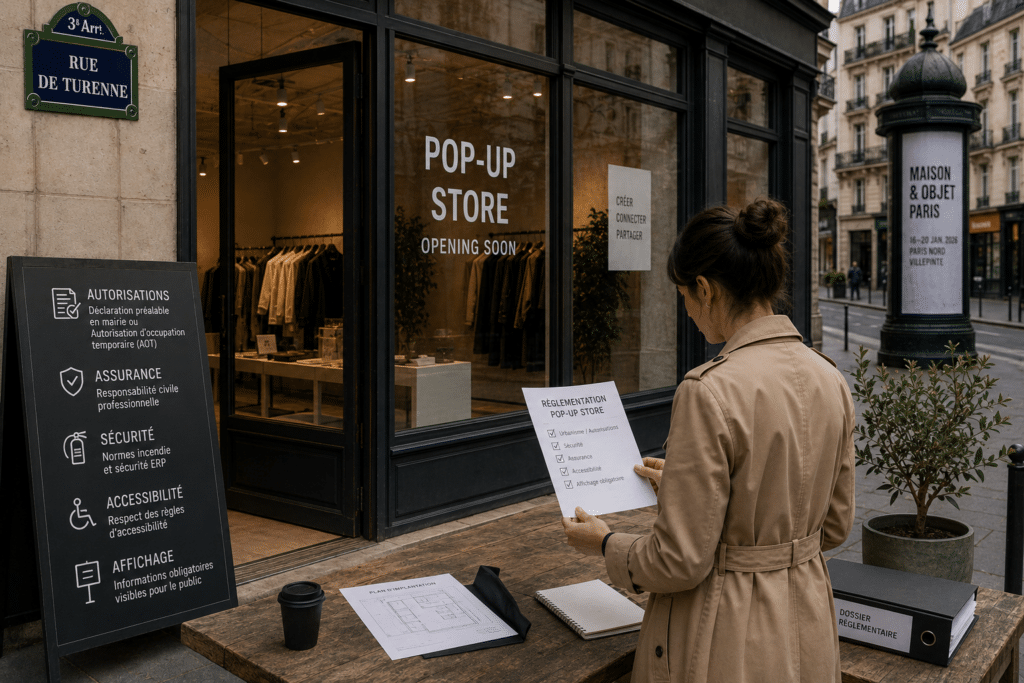
Insurance and Permits
The requirements depend on the project.
Food, alcohol, music, events, outdoor areas, or certain installations may require additional permits or insurance.
These points should be clarified before production begins.
Three typical pop-up budgets
Instead of stating a supposed average German price, it makes more sense to differentiate by activation type.
Scenario 1: Lean Market Test
A DTC brand wants to test whether its products work offline.
The concept could include:
- Small to medium-sized space
- Existing furniture
- Simple branding
- Small crew
- Little custom production
- Short lead time
The goal is not to build a temporary flagship store.
The goal is:
learn.
Which products are working? Who visits the store? How is the market reacting?
Here, an already equipped space can be more economically valuable than the cheapest available space.
Scenario 2: Branded Retail Pop-up
A fashion, beauty, or lifestyle brand launches a new collection.
You may need:
- Good location
- Visible facade
- Custom branding
- Furniture
- Staff
- POS
- Goods logistics
- Assembly and disassembly
Rent remains important, but production and operations are gaining significantly in importance.
Scenario 3: Premium Brand Activation
An international brand is planning a major launch in Germany.
The project can include:
- Premium Location
- Individual location scouting
- Creative Concept
- Store Design
- Custom Production
- Technical installations
- Audiovisual
- Staffing
- Security
- Logistics
- Local suppliers
- On-site Project Management
In this case, we are no longer just talking about renting a temporary shop.
We’re talking about a complete physical brand activation.
How to create a realistic pop-up budget?
A simple structure consists of five blocks:
1. Space
Rent and costs directly associated with the location.
2. Design & Production
Concept, furniture, branding, production, technical requirements and installation.
3. Operations
Personnel, security, POS, cleaning and daily operations.
4. Logistics
Transport, storage, goods, delivery, resupply and dismantling.
5. Marketing
Content, media, PR, influencers, creators and traffic generation measures.
This structure prevents a classic error:
spending too much budget on the location and leaving too little for the activation itself.
Where should you invest more?
That depends on the goal.
If the pop-up relies on foot traffic, location and visibility can justify a larger portion of the budget.
If the brand already has a strong community that specifically visits the store, a less expensive location can make sense, allowing more budget to be invested in experience and production.
For a B2B showroom, the interior design and accessibility can be more important than a premium storefront.
In a market test, the budget should be geared towards gaining useful insights into customers, products, and demand.
The budget should always follow the business goal.
How can the costs of a pop-up store be reduced?
Choose the most suitable space
A slightly higher rent for an already suitable store can be cheaper than a cheap space that needs a complete renovation.
Don’t rent more space than necessary
Every additional square meter can incur further design, production, and operating costs.
Use existing furniture
Check which equipment is already available in the store before production.
Focus on the concept
A pop-up doesn’t have to be a store, exhibition, event location, content studio, and hospitality space all at once.
More features usually mean more complexity.
Stay flexible with the micro-layer
Does the store really have to be located on the most expensive street?
Sometimes a location just a few streets away can offer a significantly better ratio of target audience, space, and budget.
Plan ahead
Those who search late have fewer options.
Early planning creates more opportunities to compare locations and production solutions.
How long should a pop-up store be open?
The optimal runtime depends on the goal.
One or two days can be useful for:
- Launch Events
- Press events
- Limited Drops
- Creator Events
One week or several weeks may work better for:
- Retail Tests
- Customer Acquisition
- Market validation
- Community Building
- Analysis of normal purchasing behavior
Don’t automatically choose the shortest duration just to save costs.
If the pop-up is too short to answer the actual business question, the cheaper activation may ultimately be less valuable.
Pop-up stores as a market test in Germany
Flexibility is one of the format’s greatest advantages.
An international brand doesn’t need to immediately sign a long-term lease to understand how it works in Germany.
A pop-up can help:
- To test the German market
- To validate offline demand
- To compare cities
- To launch new products
- To build brand awareness
- To meet a local community
- To assess the potential for permanent retail
The return on investment for a pop-up therefore does not consist solely of sales during its activation.
The store can also provide market data and strategic insights.
How do you find a pop-up store within your budget?
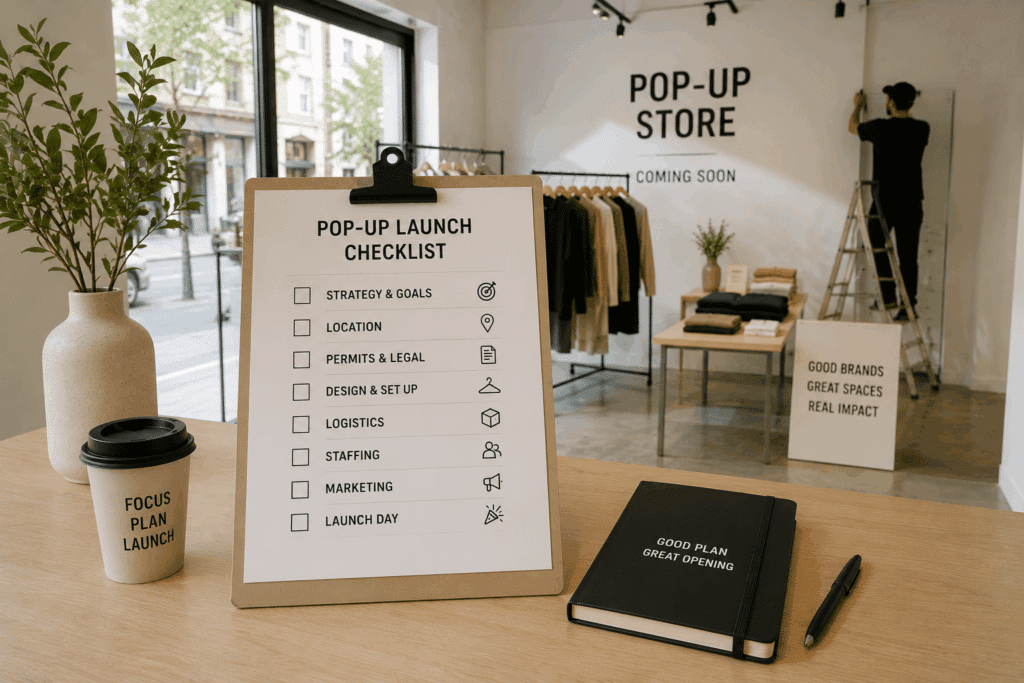
Before you compare areas, the project brief should be finalized.
Define:
- Target
- City
- Desired Location
- Dates
- Duration
- Target Group
- Size
- Technical Requirements
- Branding Requirements
- Total Budget
Only then should a decision be made as to what portion of this budget can sensibly be allocated to the location.
For Munich, you can compare pop-up spaces on Go—PopUp and check which spaces suit your concept, timing, and budget.
For projects with very specific requirements, individual location scouting can also be useful.
From location to implementation
For a simple activation, a suitable, ready-to-use surface may suffice.
More complex pop-ups require more coordination.
Depending on the project, the implementation may include:
- Location Scouting
- Creative Concept
- Store Design
- Area adjustment
- Local suppliers
- Branding
- Staff
- Permits
- Logistics
- POS
- Audiovisual
- Installation and dismantling
- Project management
Go—PopUp combines the search for temporary spaces with project support for brands that need more than just a physical space.
For international companies without their own team in Germany, this allows activation to be planned as a single, cohesive project – from location selection to local implementation.
What does a pop-up store cost in Germany? The most important information at a glance
There is no fixed average price that can be reliably applied to all pop-up stores in Germany.
The costs depend primarily on:
City + micro-location + area + operating time + equipment + production + operation.
Current offers show that temporary retail spaces can range from a few hundred euros per day to significantly higher amounts, depending on the market and format. Monthly retail concepts, on the other hand, can cost several thousand euros.
Therefore, the cheapest space is not automatically the cheapest activation.
The crucial question is how much additional work and budget are required to transform the space into a functioning branded area.
Start with the goal. Define the requirements. Set the total budget. Then decide how much of that is worth to the location.
If Munich is a possibility for your next activation, you can discover available pop-up spaces in Munich with Go—PopUp and find a space that fits your concept, timing, and budget.